
Vibe Coding: Why Most Projects Still Fail
A pragmatic framework for turning vibe-coded prototypes into systems that hold up in production.
By Rev.AISomething Team
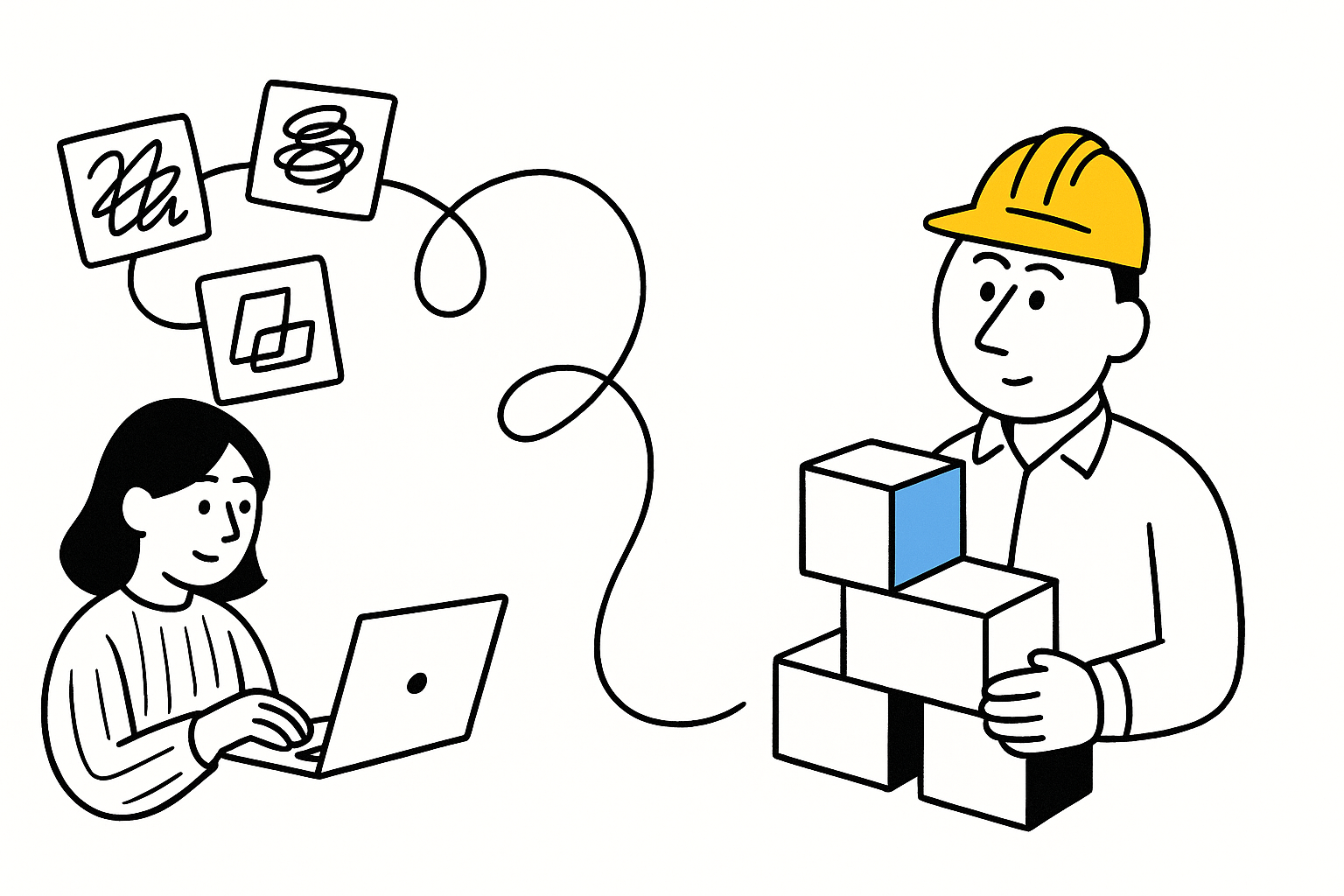
If you’ve spent any time building with AI tools like ChatGPT, Claude, or Cursor, you’ve probably done some version of vibe coding — describing what you want, letting the AI generate code, tweaking until it works, and moving on. It feels fast. It is fast. But most vibe-coded projects never make it past the prototype stage.
At Rev.AISomething, we’ve seen this pattern again and again: great ideas, slick demos, but brittle execution. The app works in screenshots — not in production.
So what exactly is vibe coding, and how can we make it production-ready?
What Is “Vibe Coding”?
“Vibe coding” is a shorthand for AI-assisted software development led by intuition rather than structure. It’s how most modern engineers now explore ideas: you describe what you want, let AI draft the scaffolding, and iterate live.
A senior developer recently described how a senior engineer at a $140M startup codes this way in a viral Reddit post:
“He said 95% of his work is vibe coding — but it’s systematic. He starts by chatting with Claude in the terminal to outline what he wants. Once the AI gets it 70% right, he switches to Cursor to clean it up, watching the AI code in real time to catch hallucinations early. Then he runs AI-based code review (via CodeRabbit), and only after human review and staging does the feature go live.”
That’s the essence of modern AI development:
human design → AI scaffolding → human refinement → AI review → human verification.
The magic is in the workflow — not the prompt.
Why Vibe Coding Works
When done right, vibe coding unlocks velocity without chaos.
✅ Speed: Engineers skip repetitive scaffolding and boilerplate.
✅ Focus: Humans spend their energy on architecture and correctness.
✅ Feedback loops: Watching AI generate code in real time surfaces misunderstandings immediately.
✅ Upskilling: Juniors level up by focusing on design instead of syntax.
This is how that $140M startup ships features 40% faster — not because AI decides the architecture, but because it eliminates the boring parts of implementation.
Common Failure Modes of Vibe-Coded Projects
But most vibe-coded apps don’t get that far. Without structure, things fall apart fast.
1. Overengineering
When AI suggests five frameworks and three libraries, you end up with a tower of Babel — impressive but fragile. Keep it boring. Stick to what you know.
2. Missing Edge Cases
AI rarely handles “what if?” logic — bad inputs, null states, API timeouts. Without defensive coding, prototypes break instantly under real users.
3. No Architectural Understanding
Many developers skip over why the AI structured things the way it did. The result? Inconsistent design and brittle dependencies.
4. Performance Issues
Generative code tends to be correct, not efficient. Without profiling, you’re shipping slow, memory-hungry code that looks fine until traffic hits.
5. Solving the Wrong Problem
AI doesn’t know your product strategy. It optimizes for what’s written, not what’s needed. Without clarity, you get beautiful solutions to irrelevant problems.
6. Reinventing the Wheel
AI loves to generate fresh code even for problems solved by existing libraries — often re-implementing the same functionality poorly.
Best Practices for Sustainable Vibe Coding
If you want to ship AI-generated code to production, treat vibe coding like an accelerator, not an autopilot.
1. Start With Intent, Not Syntax
Describe the user flow and system design before writing a single line. The AI should implement your architecture, not invent its own.
2. Use AI to Explore, Not Decide
Ask for multiple options and trade-offs. Pick the direction deliberately, document why, and have the AI generate the implementation only after you commit to a plan.
3. Pair AI Output With Guardrails
Wrap every AI-generated change in validation, logging, and tests. Let the AI draft them, but make sure humans verify edge cases, error handling, and observability hooks.
4. Iterate in Public Branches
Keep vibe coding transparent. Short-lived branches, automated previews, and AI-assisted code review make it easy for other engineers to understand what changed and why.
5. Budget Time for Hardening
Velocity is great; polish is mandatory. Bake in time for refactoring, dependency pruning, security checks, and performance passes before anything ships.
How Rev.AISomething Makes Vibe Code Production-Ready
We treat AI as the drafting table — not the general contractor.
- Architecture First: We define the shape of the system, the data flows, and the failure modes before any AI runs.
- Controlled Generation: AI handles scaffolding while engineers review in real time, annotating risks and todos.
- Rigorous Validation: Every feature runs through automated tests, security scans, and observability gates.
- Operational Readiness: We set up CI/CD, deploy with progressive rollouts, and add dashboards so issues surface in minutes, not days.
The result: you keep the speed of vibe coding but gain the reliability of a seasoned platform team.
When AI-Led Development Breaks (And How to Respond)
Even with guardrails, AI-generated code will surprise you. The key is to design for graceful failure.
- Catch issues early: Instrument feature flags and automated rollbacks so a bad deploy is just a toggle, not a postmortem.
- Make debugging boring: Standardize logging formats, keep correlation IDs flowing, and avoid bespoke utilities.
- Document decisions: Future you — or future teammates — need to know why a shortcut was acceptable. Treat decision logs as part of the deliverable.
Shipping Beyond the Demo
The teams that succeed with vibe coding don’t have secret prompts. They have discipline: clear intent, tight feedback loops, and a willingness to slow down just enough to build resiliency.
If you’re staring at an AI-built prototype that works “as long as you don’t touch anything,” you’re not alone. That’s where we step in. We harden the edges, wire in the missing ops pieces, and make sure your launch date is a milestone — not a gamble.
Ready to take your vibe-coded project all the way to production?
Book a free consultation, and let’s sketch the plan together.